


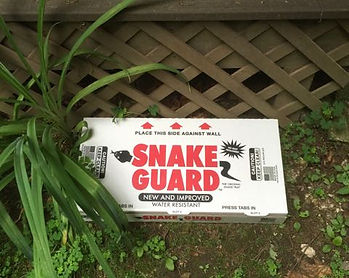

Snakes
Several kinds of snakes can be found in the New York and surrounding areas. Most common are the Garder snake, water snake, Black Rat snake and Milk snake. All of which are non-poisonous. Typically if the snakes head is round in shape it means it it non-poisonous. Other less common snakes that are found in the New York Area are the copperhead, and Pigmy rattler. They have a more triangular shaped head and can be dangerous but are very rare to find locally. The Black Rat snake though typically non aggressive to humans constricts its small prey consisting of rats and birds. This is the only large snake common to New York and can grow up to 10 feet in length. If you have a lot of snakes around your house, you most likely have a lot of bugs and small rodents that should be removed as well.
Why we Love Them:
-
Snakes naturally feed on small insects and rodents.
-
They can be good to have around to naturally control bug and small rodent populations in your yard.
Issues We Have With Them:
-
They Can Constrict and be venemous
-
Pet snake gets loose and is aggressive
-
May be unattractive to guests if you have a large population lerking in your yard
-
They just totally creep you out
Remedies:
-
Snake proofing
-
Remove wood piles, junk, clutter and rubbish
-
Clear overgrown weeds
-
Remove food supply (see mouse trapping) or (bugs) and close entry points of house
-
Emergency Snake Removal Services
Snakes of the Northeast FAQ What kinds of snakes are commonly found in the Northeast? The Northeast is home to many snake species, including: Eastern Garter Snake Northern Water Snake Eastern Milk Snake Black Rat Snake Eastern Ribbon Snake Smooth Green Snake Ring-necked Snake Northern Copperhead Timber Rattlesnake Most snakes found in New York and Connecticut are harmless and beneficial. Are snakes dangerous? The vast majority of snakes in the Northeast are non-venomous and pose little risk to people or pets. Venomous species are relatively uncommon and generally avoid human contact. Which venomous snakes live in New York and Connecticut? The two venomous snakes most commonly found in the Northeast are: Timber Rattlesnake Northern Copperhead Both species are protected in many areas and are rarely encountered by homeowners. How can I tell if a snake is venomous? Many harmless snakes can resemble venomous species. Color, pattern, and head shape are not always reliable identifiers. If you’re unsure, it’s best to keep a safe distance and contact a professional for identification. Why do I have snakes in my yard? Snakes are usually attracted by: Mice and rats Dense vegetation Wood piles Stone walls Bird feeders that attract rodents Water sources such as ponds and streams Where there are rodents, snakes often follow. Are snakes good to have around? Yes. Snakes play an important role in controlling rodent populations and are an important part of the ecosystem. A single snake may consume dozens of mice each year. What should I do if I find a snake in my house? Stay calm and keep children and pets away from the area. Most snakes that enter homes are harmless and are simply seeking shelter or following prey. Do not attempt to handle an unidentified snake. Can snakes climb? Some species can climb surprisingly well. Black Rat Snakes are excellent climbers and may be found in garages, barns, attics, trees, and even on roofs. Do snakes come into houses because of mice? Absolutely. One of the most common reasons snakes enter structures is the presence of mice or rats. Eliminating rodent activity is often the most effective long-term snake prevention strategy. Where do snakes hide around homes? Common hiding places include: Under sheds and decks Wood piles Rock walls Foundation gaps Brush piles Tall grass Crawl spaces Garages and barns What time of year are snakes most active? Snakes are typically most active from spring through early fall. They become more visible during warm weather and may bask in sunny areas. Do snakes hibernate? During the winter, snakes enter a dormant state called brumation. They often spend the colder months in rock crevices, underground burrows, foundations, or other protected locations. Can snakes get into my basement or crawl space? Yes. Snakes can enter through foundation cracks, gaps around pipes, damaged vents, and other openings. If rodents are present, the likelihood of snake activity increases. How can I keep snakes away from my property? Helpful prevention measures include: Keeping grass trimmed Removing brush and debris piles Storing firewood away from structures Controlling rodent populations Sealing foundation gaps Reducing clutter around sheds and outbuildings Will mothballs keep snakes away? No. Mothballs are generally ineffective for snake control and should not be relied upon as a solution. What should I do if I find a venomous snake? Keep a safe distance and do not attempt to move or kill the animal. Contact local authorities or a wildlife professional familiar with venomous snake handling. Can Wildlife Remedies help with snake problems? Yes. Wildlife Remedies can help identify snake species, locate entry points, reduce attractants, address rodent issues, and safely remove snakes when necessary. What areas does Wildlife Remedies serve? Wildlife Remedies provides snake inspections, removal, exclusion, and prevention services throughout: Westchester County, NY Fairfield County, CT Escambia County, FL Santa Rosa County, FL If you have a wildlife conflict, we have the remedy! Many snake problems begin with a rodent problem. Whether you’re hearing mice in the walls, finding snakes in the yard, or discovering one inside your home, Wildlife Remedies can help identify the cause and recommend a solution. Call 914-760-4241 to schedule an inspection. 🐍🏡