


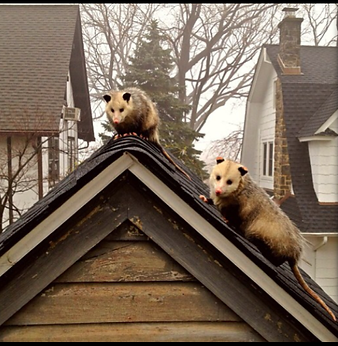


Opossums are one of the most common wild animals found throughout New York and the surrounding region. They are nocturnal marsupials, meaning they are most active at night. Easily recognized by their white face, pointed snout, pink nose, and hairless tail, opossums are unique because they are the only marsupial native to North America.
Adult opossums typically weigh between 4 and 14 pounds, although larger individuals can occasionally exceed this range. Opossums are opportunistic feeders and consume a wide variety of foods including insects, slugs, snails, rodents, fruits, berries, carrion, and pet food left outdoors.
Despite popular belief, opossums do not intentionally “play dead.” When severely frightened, they can enter an involuntary catatonic state that may last several minutes to several hours. This natural defense mechanism often causes predators to lose interest and move on.
Opossums are generally non-aggressive and prefer to avoid confrontations. If seen during daylight hours, an opossum is not necessarily sick. Mothers may be foraging for food, and young opossums often wander during the day while searching for new territory.
Why We Love ‘Em:
-
Opossums are gentle, non-aggressive animals that rarely cause problems when left alone.
-
They are nature’s cleanup crew, feeding on carrion, fallen fruit, and other organic waste.
-
They help support a balanced ecosystem by feeding on insects, slugs, snails, rodents, and other nuisance pests commonly found around homes and gardens.
-
They may help reduce tick exposure by grooming ticks from their fur and by supporting a healthy ecosystem that naturally helps control pest populations.
-
They are highly resistant to many diseases and possess a remarkably strong immune system.
-
Opossums do not commonly carry or spread rabies. Their body temperature averages around 94–97°F, which is lower than most mammals and makes it difficult for the rabies virus to survive and reproduce. While no animal is completely immune, rabies in opossums is extremely rare.
-
Female opossums carry their young in a pouch, much like kangaroos, making them one of North America’s most fascinating wildlife species.
Issues We Have With Them:
-
Opossums may take shelter beneath decks, sheds, porches, crawl spaces, and other protected areas around homes.
-
They can make a mess around pet food bowls, garbage cans, and compost piles.
-
Opossums may leave droppings and odors in areas where they take up residence.
-
They occasionally enter attics, garages, or sheds through existing openings in search of shelter.
-
Although generally harmless, they may hiss, bare their teeth, or drool when frightened. This behavior is defensive and usually a bluff rather than a sign of aggression.
If you have damaged foundation vents, gaps beneath porches, openings in crawl spaces, or areas beneath decks and sheds, an opossum may decide to make itself at home. Female opossums often seek protected locations to raise their young and may remain on a property until their babies are old enough to leave the pouch and travel independently.
Opossums may also take refuge beneath outdoor structures, inside sheds, or in woodpiles around the property. While they generally do not cause extensive structural damage, their presence can lead to odors, droppings, and unwanted encounters with pets.
Remedies:
-
Property Inspection
-
Humane Opossum Removal
-
Exclusion Services
-
Preventative Home Sealing
-
Deck and Porch Screening
-
Crawl Space Protection
-
Foundation Vent Repairs
-
Opossum Clean-Up and Odor Control
-
Opossum Nest Removal
-
Mother Opossum and Baby Removal
-
24/7 Emergency Opossum Removal Service
-
Wildlife Prevention Programs
-
Secure Garbage Storage Solutions
-
Ongoing Wildlife Monitoring and Maintenance